Fellowship Research Opportunities:
Research opportunities and mentorship will be provided by all members of the Division of Gynecologic Oncology in the Departments of Obstetrics and Gynecology at the University of Chicago Medicine and NorthShore University Health Systems. Progress of the fellow towards the goal of a thesis and a published manuscript will be evaluated with weekly lab meetings during the laboratory year and with a quarterly review of progress during the junior and senior clinical years. Possible research mentors and their projects, or areas of interest, are listed below:
Research Mentors & Facilities:
Ernst Lengyel MD, PhD., Professor, Department of Obstetrics and Gynecology, Principal Investigator, The Lengyel Laboratory, University of Chicago Medical Center.
Dr. Lengyel’s Gynecologic Oncology laboratory is located in the Gordon Center for Integrative Science (GCIS). There are currently 5 postdoctoral fellows, 1 junior faculty member, 1 graduate student in Cancer Biology and 2 research technicians. The laboratory is approximately 1,800 sq. ft. of space, in close proximity to such basic science laboratories as Biochemistry, Chemistry and the Ben May Institute for Cancer Research. This location provides a solid structure for inter-departmental collaboration.
Major research interests: to understand the molecular mechanisms of ovarian cancer cell invasion and metastasis, to identify new targets for the treatment of ovarian cancer (c-Met, a5-integrin), to understand the role of stroma in promoting ovarian cancer metastasis by studying the role of c-Met and its ligand HGF/SF, and different miRNAs in normal and cancer-associated stroma, to determine how adhesion receptors (integrins) and invasion associated proteases (urokinase) cooperate in the attachment and invasion of ovarian cancer.
Stacy Lindau, MD, MAPP, Catherine Lindsay Dobson Professor, Department of Obstetrics and Gynecology and Professor of Medicine (Geriatrics and Palliative Medicine), Vice Provost for Strategic Initiatives at the University of Chicago.
Dr. Lindau is the founder and director of the Program in Integrative Sexual Medicine (PRISM), an interdisciplinary clinic to address sexuality issues for women and girls with cancer and Feed1st – a fully self-serve pantry founded in 2010 that delivers more than 50 thousand pounds of food and hygiene items to more than 15 thousand people annually from the University of Chicago's Hyde Park medical center.
Dr. Lindau’s research examines mechanisms through which social and sexual conditions relate to health across the life course, including the effects of iatrogenesis on social and sexual functioning. Her CommunityRx program of social care research studies how and why connecting people to health-promoting community-based resources drives health. Dr. Lindau also leads the National Cancer Institute-funded Bionic Breast Project, a paradigm-shifting effort to preserve sensation and mitigate pain following mastectomy using a neuroprosthesis approach.
Several of her discoveries have advanced from research lab to real life: NowPow, LLC (acquired in 2021 by Unite USA, Inc.), MAPSCorps, 501c3 (joined Northwestern University’s School of Education and Social Policy in 2023) and the Scientific Network on Female Sexual Health and Cancer, 501c3 (inaugural chairperson). She is founder and chief innovation officer of STEAMe, LLC, a technology platform that convenes and facilitates effective community-wide workforce development initiatives.
Gustavo Rodriguez, MD, Department of Obstetrics and Gynecology, Section of Gynecologic Oncology, NorthShore University Health Systems
Dr. Rodriguez and his laboratory, located in the NSUHS Research Institute, are dedicated to developing an effective pharmacologic approach for the chemoprevention of ovarian and uterine cancer. Dr. Rodriguez spearheaded the study in primates that led to the discovery that oral contraceptive (OC) progestins induce apoptosis in the ovarian epithelium. This discovery led to a new hypothesis regarding the biologic mechanism underlying the marked 30-50% reduction in ovarian cancer risk associated with routine use of OCs, and opened the door to the development of progestins as chemopreventive agents for ovarian and now endometrial cancer. Dr. Rodriguez’s animal work has also included pioneering studies using the chicken ovarian cancer animal model. Dr. Rodriguez previously worked on projects elucidating the molecular biology of ovarian and endometrial cancer. He is collaborating closely with a team from Walter Reed on a Department of Defense-funded Program Project Grant. He is project director of a set of aims directed toward development of progestins and vitamin D for the chemoprevention of ovarian and uterine cancer These studies include: in vitro studies designed to elucidate the molecular effects of progestins and vitamin D on human ovarian and uterine epithelial cells, and in vivo studies in mice and chickens, as well as pilot studies in women, including cooperative group studies such as GOG 214 (Rodriguez, PI).
Sridevi Challa, PhD, Assistant Professor, Department of Obstetrics and Gynecology, Section of Gynecologic Oncology, University of Chicago Medical Center
The Challa Laboratory in the Department of Obstetrics and Gynecology is dedicated to advancing the understanding of molecular mechanisms in gynecologic cancers, with the ultimate goal of developing innovative therapeutic strategies to improve outcomes for women affected by these diseases. Dr. Challa's ongoing research explores the roles of NAD+ metabolism and mRNA translation in the progression of gynecologic cancers.
Dr. Challa is also developing the Endometrial Cancer Research Program at the University of Chicago alongside Drs. Gini Fleming, Diane Yamada and Katherine Kurnit. The primary goal of this program is to advance the mechanistic underpinnings of uterine cancer and improve therapeutic outcomes for uterine cancers.
Richard Koya, MD, PhD, Professor, and Kunle Odunsi, MD, PhD, AbbVie Distinguished Service Professor, Department of Obstetrics and Gynecology, Section of Gynecologic Oncology, University of Chicago Medical Center
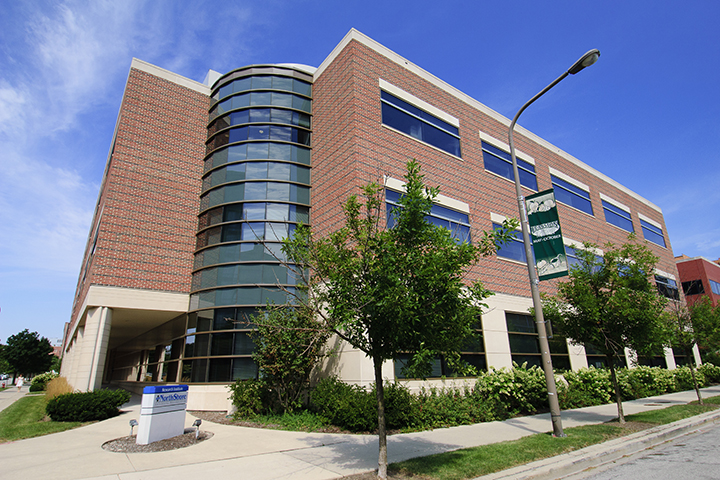
NSUHS Research Institute
